Kenya
Since 2012, TFI has supported programs in Kenya. One of the biggest issues there is the cyclical conditions of poverty for those living in slums. Historically, and equally important, is the impact of HIV/AIDS on the population at large. Presently, TFI supports three organizations that address the women and children impacted by these issues.
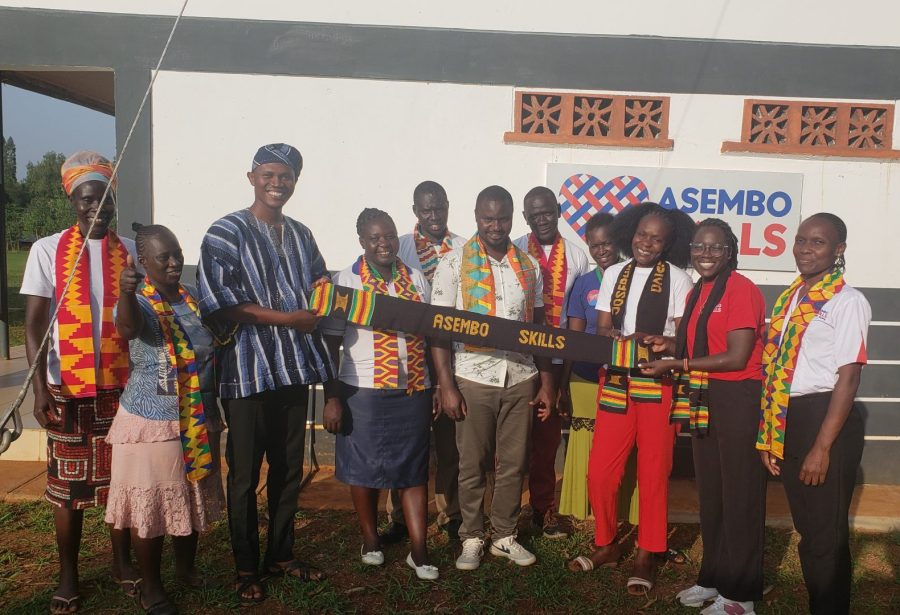
Asembo Skills for Hope
Source: Asembo Skills for Hope
Tom Nazario met the Executive Director of Asembo, Grace Ongong’a, at an international conference and was immediately impressed with her program and touched by her dedication to the women of Asembo, Kenya, who are often trapped in a cycle of generational poverty. Asembo offers year-long vocational trainings in practical fields, like sewing and tailoring, alongside the professional skills needed to build a home business. The program helps women acquire skills they need to enter the workplace and, if they wish, begin to develop their own economic independence so that they don’t fall into poverty. Furthermore, graduates of the program are provided mentorships, counseling, micro-loans, and family planning guidance to give them the confidence to make and manage their own money. This combination of employment and life skills creates opportunities for women to take control of their lives, support their children, and engage in their communities.
Margaret Okari Children's Foundation
Source: Margaret Okari Children’s Foundation
The Margaret Okari School was built in 2009. At this school, they select children orphaned by the AIDS pandemic. Faced with this pandemic, one woman began taking in children who had lost their parents and made it her duty to provide for the basic needs of the children she had found. Moreover, she wanted to give them the chance to live better lives and gain leadership skills to build their own future.
In 2015, inspired by the good work of the Margaret Okari school and orphanage, TFI offered support. The school has since become one of the top performing schools in the region, despite lacking more modern facilities. TFI’s hope is to see this community continue to grow and thrive.
Source: heatherorganics
The Nest
Source: The Nest
Source: The Nest
The Nest Baby Village and Children’s Home was founded in 1997 by a woman seeking to help children whose mothers have been arrested, typically for petty crimes, and while their children are left without care. Fortunately, when the women are released, they are reunited with their children. These women are allowed to stay at the Nest’s halfway house until they get back on their feet.
The Nest’s Baby Village also takes in abandoned children under the age of 2 and cares for them until extended family can be found or an adoption can be arranged through social workers. Often the babies move to the Children’s Home when they are a bit older. Afterwards, they are provided academic education along with the other children who may be awaiting their mothers’ releases. Moreover, in some cases, children come to The Nest with trauma from abusive backgrounds, and so they are provided counseling and support to be able to rebuild their lives and futures. Since TFI’s visit in 2012, TFI has been supporting The Nest’s efforts.
Source: Sandra Hammerl
Rona Foundation
Source: Rona Foundation
The Rona Foundation started their Orphans and Widows Centre in 2012 to serve the rural widows and orphans who were often forgotten by society. Rona works to provide job training to rural widows and works for their protection and advancement of their rights in the community. Rona also caters to the educational needs, healthcare, and emotional wellbeing of rural orphaned children who have no other support. They serve more than 8,000 widows and support 180 orphans each year. Their training manual for widows, which encourages their fair treatment, has been modeled in other countries and partner organizations that seek to bring awareness and advocacy to this underserved group. TFI’s president met Rona’s founder at a conference in 2019 and offered support for their important work.
Source: Rona Foundation
St. Vincent's Children of Kibera
Source: St. Vincent’s Children of Kibera
St. Vincent’s Children of Kibera makes an effort to help the most vulnerable children in one of the world’s largest slums. They provide a nursery school with nutritious meals so that the children do not go hungry. They also develop the children’s basic skills that they will need when they start primary school.
St. Vincent’s Children of Kibera also operates a Rescue Center. This center takes in orphaned or abandoned children who may have suffered traumatic experiences. At the center, these children are given support through counseling in a loving environment. In addition, St. Vincent’s Women’s Community Support Program partners with local women to create opportunities for single mothers. In fact, this program has helped women start their own businesses to provide for their children. Their successful work has allowed for families to rise out of poverty and redefine Kibera’s development.
Source: St. Vincent’s Children of Kibera
WAVE Children's Foundation
Source: WAVE Children’s Fund
WAVE Children’s Foundation aims to ensure that all the children they serve–who are growing up without families-have access to education and a safe home. In addition to a school, they provide the children they serve with housing, nutritious meals, and medical care. TFI gave them funding to support their principal school in Nairobi, Kenya, where some of the poorest children in that city work hard on their studies in hope of a better future and life.
Source: WAVE Children’s Fund